Daily Read / Canada & Community
Canada & Community · Explain a process in order and connect everyday services to the people who decide about them
Who Decides About Your Street? How a Town Council Works
Roads, parks, libraries and garbage pickup are run by your local council. Learn what a council does, how it votes, and who chooses the council.
Device/browser voice. Pronunciation and availability vary.
The people closest to home
Think about your walk to school. Someone decided where the sidewalk would go, how often the snow is cleared, and when the garbage truck comes down your street. In Ontario, many of these everyday services are run by your municipality: your city, town or township.
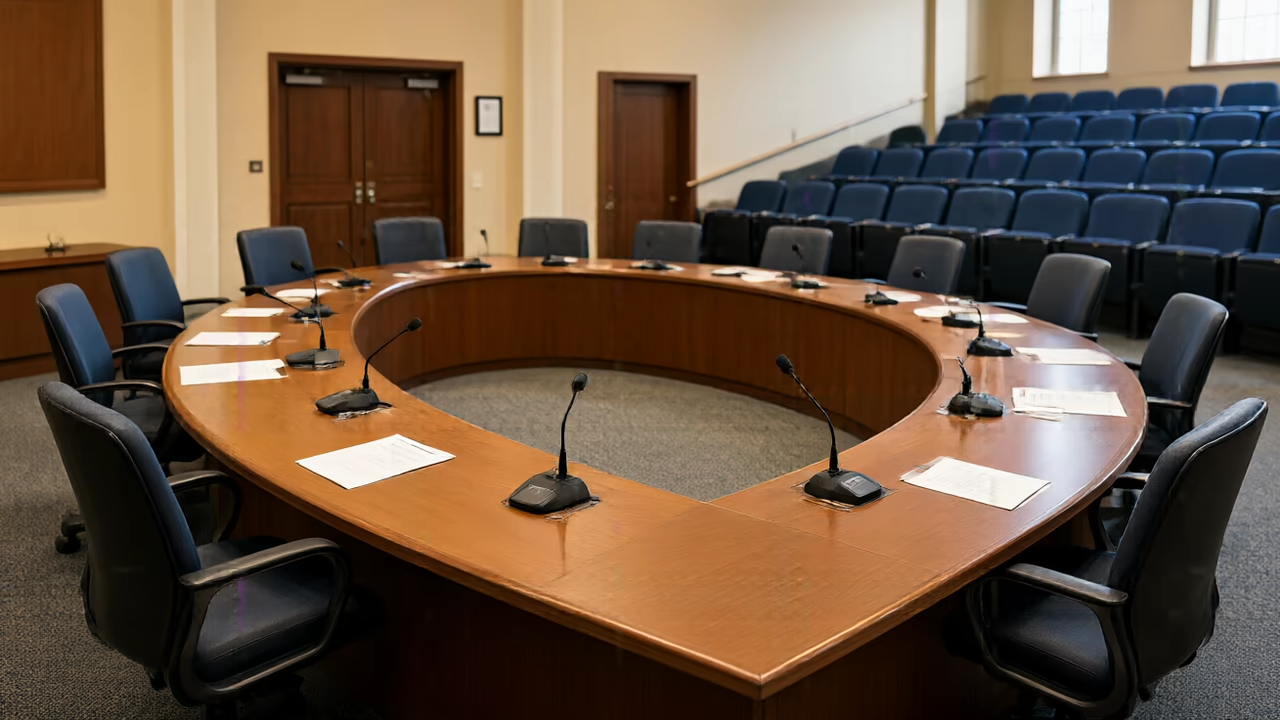
Municipalities look after roads and sidewalks, public transit, clean water and wastewater, garbage and recycling, parks, community centres and libraries. Fire services are run locally too. Each municipality is led by an elected group called a council, and every council in Ontario must have at least five members, including the head of council, often called the mayor.[4]
One vote each
A council makes decisions by voting. Each member has one vote, and most decisions pass when more than half of the members vote yes. That is called a majority. Each councillor can choose how to vote on every issue, so councillors often disagree and argue for different choices before a vote.
Councillors do more than vote. Many represent one area of the municipality, called a ward. They listen to people who live there, hold community meetings, suggest new ideas, and help residents get the services they need. The mayor leads council meetings and speaks for the whole municipality.[3]
How an idea becomes a decision
Here is an example of how the process can work. It is a made-up example, not a real decision. Parents notice that cars drive fast past an elementary school, and they want a new crosswalk. First, they contact their ward councillor. The councillor brings the idea to a committee, a smaller group of council members who study a topic in detail.
At the committee meeting, residents can sign up to speak or send in written comments. The committee might hear from parents who want the crosswalk and from others who worry about the cost or traffic. Then the committee makes a recommendation. Finally, the full council debates and votes. If a majority votes yes, the crosswalk can be added to the plans and the budget.[3]
Choosing the council
Every four years, Ontario holds municipal elections. People vote for their mayor and councillors, and also for school board trustees, who help make decisions about public schools. In 2026, voting day across Ontario is Monday, October 26. The people elected that day begin their term on November 15, 2026, and serve until 2030.[1]
Who can vote?
To vote in a municipal council election in Ontario, a person must be a Canadian citizen and at least 18 years old. They must also have a connection to the municipality. Most people qualify because they live there. People who own or rent property in a municipality where they do not live can also qualify.
Children cannot vote, but they are still part of the community that council decisions affect. They use the parks, ride the buses, borrow library books and walk on the sidewalks. Learning how council works now means you will already know how to take part when you are old enough to vote.[2]
Fast lesson
Use these checks before you answer the practice questions.
If questions come up about schools' curriculum, health care or the army, explain that those belong to other levels of government. This reading covers local government only.
This reading explains the process, not who to vote for. If your child asks about candidates, focus on how to find out what each one says rather than on a family opinion.
Point out that the crosswalk is a labelled example. Ask your child to invent a different example and walk it through the same steps.
Common mistakes
Why this fails: Decisions are made by the council voting; the mayor has one vote like other members.
Why this fails: Living in the municipality is the most common way to qualify. Owning or renting property elsewhere is an additional way.
Why this fails: The article labels it as made up to show how the process works.
Word Lab
Use the meaning, hear the word, then try it in your own sentence.
municipality
nouna city, town or township with its own local government
Our municipality runs the local library.
council
nouna group of elected people who make decisions for a municipality
The council voted on the new crosswalk.
councillor
nounan elected member of a council
We emailed our ward councillor.
mayor
nounthe elected leader of a city or town council
The mayor leads council meetings.
ward
nounone area of a municipality that elects its own councillor
Each ward has one councillor.
majority
nounmore than half of a group
A majority voted yes, so the plan passed.
committee
nouna small group that studies a topic and makes suggestions
The committee heard from parents.
recommendation
nouna suggestion about what should be done
The committee's recommendation went to council.
budget
nouna plan for how money will be spent
The crosswalk had to fit in the budget.
trustee
nounan elected person who helps make decisions for a school board
Voters also choose school board trustees.
eligible
adjectiveallowed to do something because you meet the rules
You must be 18 to be eligible to vote.
resident
nouna person who lives in a place
Residents can speak at committee meetings.
Check your understanding
Choose an answer, explain your choice, and then check. Hints and retries are welcome.
Try the questions here. Public practice does not save a learning record.
Support · Find it in the text
Support · Find it in the text practice
Each answer is in the article. Point to the sentence.
1. What are three kinds of municipality named in the first section?
2. What is the smallest number of members an Ontario council can have?
3. How many votes does each council member have?
4. How often are municipal elections held in Ontario?
5. On what date does the new council term begin after the 2026 election?
6. What is a ward?
Apply · Explain the process
Apply · Explain the process practice
Use the article to explain why and how.
7. Why might councillors argue before a vote?
8. Why does a committee study an idea before the full council votes?
9. In the example, why might some residents not want the crosswalk?
10. Put these steps in order: council votes, parents contact councillor, committee recommends, residents speak at committee.
11. What is the difference between a councillor and a school board trustee?
12. Name two ways a councillor helps residents besides voting.
Reason · Use the ideas
Reason · Use the ideas practice
Apply what you learned to new situations.
13. A park near your home has a broken swing. Who would you contact first, and why?
14. A council of 7 votes 4 yes and 3 no. Does the idea pass? Explain.
15. Jun is 16 and a Canadian citizen. Can he vote in the 2026 municipal election? What could he still do?
16. A classmate says, 'The mayor decides everything for the city.' Use the article to correct this.
17. Which service from the article did you use this week? Describe how.
Practice answer key
- 1. City, town or township.
The first paragraph names all three. - 2. Five, including the head of council.
This is in 'The people closest to home'. - 3. One.
'One vote each' explains this. - 4. Every four years.
It is the first sentence of 'Choosing the council'. - 5. November 15, 2026.
The term runs until 2030. - 6. One area of a municipality, which often has its own councillor.
Defined in 'One vote each'. - 7. Each councillor can choose how to vote, so they may want different things and try to persuade each other.
Disagreement is a normal part of the process. - 8. A smaller group can study it in detail and hear from residents, then give the council a recommendation.
This is the committee's job in the example. - 9. They might worry about the cost or about traffic.
The article mentions both concerns. - 10. Parents contact councillor → residents speak at committee → committee recommends → council votes.
This matches the order in the example. - 11. A councillor helps make decisions for the municipality; a trustee helps make decisions for public schools.
Both are elected on the same day. - 12. Any two: listening to residents, holding community meetings, suggesting new ideas, helping people get services.
These are listed in 'One vote each'. - 13. The ward councillor or the municipality, because parks are a municipal service.
Matching a service to the right level of government is the key skill. - 14. Yes. 4 is more than half of 7, so it is a majority.
Half of 7 is 3.5. - 15. No, he is under 18. He could still contact his councillor, learn about the issues, or attend meetings.
The article explains that young people are still part of the community. - 16. The mayor leads meetings, but decisions are made by the whole council voting, with one vote per member.
Most decisions need a majority of council. - 17. Personal answers will vary, such as walking on a sidewalk or borrowing a library book.
Connecting services to daily life shows why councils matter.
Related skills
Put it in your own words
This draft is not saved when you leave or refresh the page.
Check your own explanation
This is self-review, not automatic marking.
Compare with a model response
An idea can start with residents who notice a problem, like a busy street near a school. First, they contact their ward councillor. The councillor brings the idea to a committee, which is a smaller group of council members who study it. At the committee meeting, residents can speak or send written comments. Then the committee makes a recommendation to the full council. The council debates the idea and votes, and it passes if a majority, more than half, vote yes. The council itself is chosen every four years by voters who are Canadian citizens, at least 18 years old, and live in or own or rent property in the municipality.
Sources and revision notes
Source check: 2026-10-25. Grade guidance is an editorial suggestion, not a standardised reading score.
- District School Board of Niagara — Municipal and School Board Elections 2026
- Government of Ontario — 2026 voters' guide: Eligibility to vote
- City of Toronto — My Local Government (how council and committees work)
- Association of Municipalities of Ontario — Municipal 101
What changed in this edition?
The voting date, term dates and trustee elections come from the DSBN page; voter eligibility from the Government of Ontario 2026 voters' guide (simplified: the spouse rule and ward details are left out); the committee and majority process from the City of Toronto guide, which describes Toronto and may differ in smaller municipalities; services and the five-member minimum from AMO. The crosswalk is an invented example. The reading explains the process and does not support any candidate or position.