Daily Read / History and community
History and community · Use dates and numbers as evidence, compare what two sources say, and explain why a community sets aside a day of remembrance
What Is Indigenous Veterans Day? Honouring Service on November 8
Every November 8, Canadians honour First Nations, Inuit and Métis veterans. Learn how the day began, who served and how sources tell its history.
Device/browser voice. Pronunciation and availability vary.
Two days in November
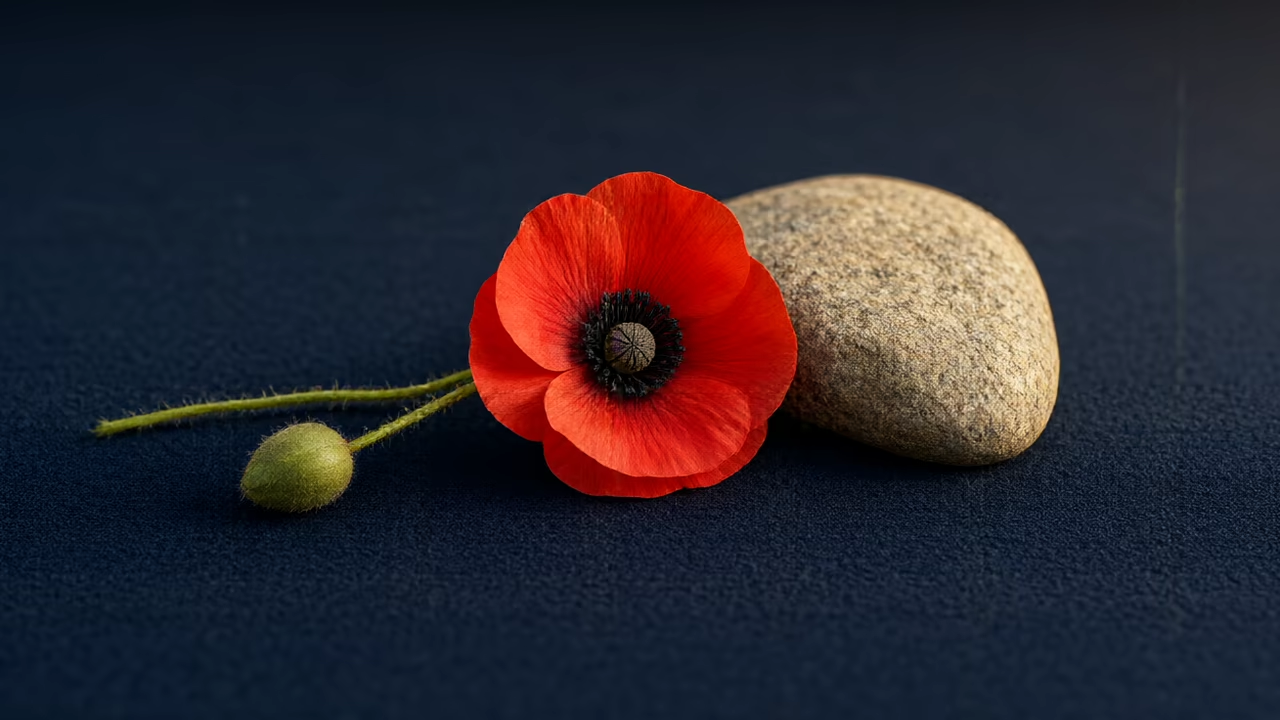
Every November, many Canadians pin a red poppy to their coats and pause for a moment of silence on November 11, Remembrance Day. Three days earlier, on November 8, there is another day of remembrance that fewer people know about.
The Canadian Encyclopedia says Indigenous Veterans Day is observed in Canada on November 8. It honours First Nations, Inuit and Métis members of the Canadian armed forces. A veteran is a person who has served in the military. National Defence, the federal department in charge of Canada's military, describes the day as being observed in addition to Remembrance Day, not instead of it.[1]
How the day began
Indigenous Veterans Day did not begin with a government order. The Canadian Encyclopedia says it began as an idea of the National Aboriginal Veterans Association, a group of veterans. The first Indigenous Veterans Day was held on November 8, 1993. In 1994, the government of Manitoba officially recognized the day. Today, the encyclopedia says, it is recognized by the federal government and observed across the country.
Sources do not always describe a beginning in the same way. A 2025 National Defence article says the day was established in 1994. The encyclopedia gives 1993 for the first observance and 1994 for Manitoba's official recognition. Careful readers notice when two sources give different dates and look for the reason. Here, the two sources may be counting different starting points: the first ceremony, or the first official recognition.[1]
Who served
First Nations, Inuit and Métis people have served in Canada's military for a long time. Veterans Affairs Canada, the federal department that supports veterans, gives these numbers. More than 4,000 Indigenous people served in uniform during the First World War. In the Second World War, more than 3,000 First Nations members served, along with an unknown number of Inuit and Métis people. Several hundred served in the Korean War.
Altogether, Veterans Affairs Canada says it has been estimated that more than 12,000 First Nations, Métis and Inuit people served in the conflicts of the 20th century, and at least 500 of them died.
Joining up was not always easy. Veterans Affairs Canada explains that many recruits had to travel great distances from remote communities to enlist. Many also had to learn a new language and adjust to a very different way of life.[2]
Skills and stories
In the First World War, Veterans Affairs Canada says, hunting and tracking skills helped many Indigenous soldiers become snipers and scouts. Indigenous soldiers earned at least 50 awards for bravery in that war. Francis Pegahmagabow was awarded the Military Medal with two bars, which means he earned it three times. A monument in Parry Sound, Ontario, remembers him as Canada's most decorated Indigenous soldier of the First World War. John Shiwak, an Inuit soldier, was a sniper in the same war.
In the Second World War, some soldiers who spoke Cree used their language as a code. Veterans Affairs Canada says Cree-speaking soldiers, including Charles "Checker" Tomkins of Alberta, translated radio messages into Cree so the enemy could not understand them. Tommy Prince, an Ojibwa soldier from Manitoba, served in both the Second World War and the Korean War, where he fought at the Battle of Kapyong in April 1951.[2]
Coming home
When the wars ended, many Indigenous veterans did not receive the same treatment as other Canadian veterans. Veterans Affairs Canada explains that, under the Indian Act, most First Nations veterans could not receive the same pensions, grants or benefits. After the First World War, some reserve land was given to non-Indigenous veterans to farm, while most First Nations veterans received only a certificate to use land their own community already had.
National Defence says Indigenous veterans were denied the same benefits, land grants and support for returning to everyday life that other veterans received. Indigenous Veterans Day remembers this part of the story too, not only the battles.[2]
Service today and how people take part
Indigenous people continue to serve. The Canadian Encyclopedia notes service in peacekeeping and in Afghanistan, and says that in 2022 Jocelyn (Joe) Paul became the first Indigenous officer to command the Canadian Army. Veterans Affairs Canada describes the Canadian Rangers, a reserve group that works mainly in the North and along remote coasts, using knowledge of the land to watch over coastlines and help with local rescues.
How can people mark the day? National Defence invites Canadians to attend ceremonies, read the stories of Indigenous veterans or take time to reflect on what they gave. In Ottawa, the National Aboriginal Veterans Monument honours Indigenous people who served, from the First World War to today. Learning one veteran's name and story is a good place to start.[3]
Fast lesson
Use these checks before you answer the practice questions.
Make sure your child can name First Nations, Inuit and Métis as three distinct peoples. Avoid treating them as one group, just as the sources do.
Write 1993 and 1994 on paper and ask what each source says happened in that year. Point out that a difference is a reason to read carefully, not proof that one source is wrong.
The 'Coming home' section describes unfair treatment. Stick to what the sources say, let your child ask questions, and focus on why remembering the full story matters.
Choose one named veteran from the article and look for more about them together on Veterans Affairs Canada, or attend a local ceremony on November 8 if one is offered.
Common mistakes
Why this fails: It is a separate day on November 8, observed in addition to Remembrance Day on November 11.
Why this fails: It is an estimate for all 20th-century conflicts together, not one war.
Why this fails: The sources may describe different events, such as the first ceremony and the first official recognition.
Word Lab
Use the meaning, hear the word, then try it in your own sentence.
veteran
nouna person who has served in the military
Indigenous Veterans Day honours First Nations, Inuit and Métis veterans.
Indigenous
adjectivedescribing the first peoples of a place; in Canada, First Nations, Inuit and Métis peoples
Indigenous soldiers served in both world wars.
observe
verbto mark a special day with ceremonies or other actions
Canadians observe Indigenous Veterans Day on November 8.
recognize
verbto officially accept that something is real or important
Manitoba officially recognized the day in 1994.
enlist
verbto join the armed forces
Some recruits travelled great distances to enlist.
recruit
nouna person who has just joined the armed forces
Many recruits had to learn a new language.
sniper
nouna soldier trained to shoot accurately from a hidden place far away
John Shiwak was a sniper in the First World War.
scout
nouna soldier sent ahead to gather information
Tracking skills helped some soldiers become scouts.
decorated
adjectivegiven medals or awards for bravery or service
Francis Pegahmagabow was a highly decorated soldier.
benefits
nounmoney or help given by the government, such as pensions
Many First Nations veterans could not receive the same benefits.
monument
nouna statue or structure built to remember people or events
A monument in Parry Sound remembers Francis Pegahmagabow.
estimate
verbto give a careful guess of a number when an exact count is not known
It has been estimated that more than 12,000 people served.
Check your understanding
Choose an answer, explain your choice, and then check. Hints and retries are welcome.
Try the questions here. Public practice does not save a learning record.
Support · Find it in the text
Support · Find it in the text practice
Each answer is stated in the article. Point to the sentence.
1. On what date is Indigenous Veterans Day observed?
2. Which three groups of people does the day honour?
3. Which group first came up with the idea for the day?
4. Which province officially recognized the day in 1994?
5. Where is there a monument to Francis Pegahmagabow?
6. Who became the first Indigenous officer to command the Canadian Army, and when?
Apply · Explain with evidence
Apply · Explain with evidence practice
Use 'because' and a fact from the article.
7. Why was joining the military especially hard for some Indigenous recruits?
8. How did hunting and tracking skills help some soldiers in the First World War?
9. What does 'the Military Medal with two bars' mean?
10. Why does the article say the day remembers 'not only the battles'?
11. What do the Canadian Rangers do?
12. Name two ways people can take part in Indigenous Veterans Day.
Reason · Dates, numbers and sources
Reason · Dates, numbers and sources practice
Order events, compare numbers and weigh sources.
13. Put in order: Manitoba recognizes the day; Battle of Kapyong; first Indigenous Veterans Day; Joe Paul commands the Canadian Army.
14. About how many more Indigenous people served in the First World War than First Nations members in the Second, using the article's numbers?
15. Two sources give 1993 and 1994. How could you find out more?
16. Sort: (a) The day is observed on November 8. (b) Everyone should attend a ceremony. (c) More than 4,000 Indigenous people served in the First World War.
17. How does this article add to what you learned in 'Why Do Canadians Wear Poppies?'
Practice answer key
- 1. November 8.
See 'Two days in November'. - 2. First Nations, Inuit and Métis members of the Canadian armed forces.
See 'Two days in November'. - 3. The National Aboriginal Veterans Association.
See 'How the day began'. - 4. Manitoba.
See 'How the day began'. - 5. In Parry Sound, Ontario.
See 'Skills and stories'. - 6. Jocelyn (Joe) Paul, in 2022.
See 'Service today and how people take part'. - 7. Because many had to travel great distances from remote communities and learn a new language and way of life.
See the last paragraph of 'Who served'. - 8. They helped them become snipers and scouts.
See 'Skills and stories'. - 9. The medal was earned three times: once for the medal and once for each bar.
The article explains this in 'Skills and stories'. - 10. Because it also remembers the unequal treatment many Indigenous veterans faced after they came home.
See 'Coming home'. - 11. They work mainly in the North and along remote coasts, using knowledge of the land to watch over coastlines and help with local rescues.
See 'Service today and how people take part'. - 12. Attend a ceremony, read the stories of Indigenous veterans, or take time to reflect.
National Defence lists these in the last section. - 13. Battle of Kapyong (1951) → first Indigenous Veterans Day (1993) → Manitoba recognizes the day (1994) → Joe Paul commands the Canadian Army (2022).
Use the years in the article. - 14. About 1,000 more (more than 4,000 compared with more than 3,000). The Second World War number does not include Inuit and Métis people, so it is not a complete comparison.
Check what each number counts before comparing. - 15. Read what each source says happened in that year, and check another trusted source, such as Veterans Affairs Canada.
Different dates often describe different events. - 16. Facts: (a) and (c). Opinion: (b).
Facts can be checked in a source; 'should' statements are opinions. - 17. It shows that Remembrance includes Indigenous veterans' service and their unequal treatment, with its own day on November 8.
Linking readings builds a fuller picture.
Related skills
Put it in your own words
This draft is not saved when you leave or refresh the page.
Check your own explanation
This is self-review, not automatic marking.
Compare with a model response
Indigenous Veterans Day is observed every year on November 8, three days before Remembrance Day. It honours First Nations, Inuit and Métis people who served in Canada's military. The Canadian Encyclopedia says the National Aboriginal Veterans Association held the first one in 1993, and Manitoba officially recognized it in 1994. More than 4,000 Indigenous people served in the First World War, and it has been estimated that more than 12,000 served in conflicts of the 20th century. Francis Pegahmagabow earned the Military Medal three times, and a monument in Parry Sound, Ontario, remembers him. After the wars, many First Nations veterans did not receive the same pensions, benefits or land as other veterans. That is why the day remembers both their service and what happened when they came home.
Sources and revision notes
Source check: 2026-10-30. Grade guidance is an editorial suggestion, not a standardised reading score.
- The Canadian Encyclopedia — Indigenous Veterans Day
- Veterans Affairs Canada — Indigenous Veterans
- National Defence (The Maple Leaf) — Beyond Remembrance: The meaning of Indigenous Veterans Day (2025)
What changed in this edition?
The November 8 observance honouring First Nations, Inuit and Métis members of the Canadian armed forces, the National Aboriginal Veterans Association's initiative, the first observance on November 8, 1993, Manitoba's official recognition in 1994, federal recognition, peacekeeping and Afghanistan service, and Jocelyn (Joe) Paul's 2022 command of the Canadian Army come from The Canadian Encyclopedia. The service numbers (more than 4,000 in the First World War; more than 3,000 First Nations members plus unknown numbers of Inuit and Métis in the Second World War; several hundred in Korea; an estimated 12,000+ in 20th-century conflicts with at least 500 deaths), recruitment hardships, snipers and scouts, at least 50 bravery awards, Francis Pegahmagabow's Military Medal with two bars and Parry Sound monument, John Shiwak, Cree-speaking code talkers including Charles "Checker" Tomkins, Tommy Prince and the Battle of Kapyong, unequal pensions, grants and benefits under the Indian Act, the post-First World War land treatment, the Canadian Rangers and the National Aboriginal Veterans Monument in Ottawa come from Veterans Affairs Canada. The 'established in 1994' wording, observance in addition to Remembrance Day, denied benefits, land grants and reintegration support, and ways to take part come from National Defence. The explanation that the two sources may count different starting points is this lesson's interpretation. This lesson explains history and commemoration and does not take a position on current policy.